

Shoulder impingement is pain that happens when the tendons of your rotator cuff get compressed and irritated as you raise your arm, and in most cases improve with the right strengthening and movement changes. You usually feel it as a pinch or ache on the front or side of the shoulder, especially when reaching overhead or behind you. The encouraging part is that this is one of the most treatable shoulder problems we see, and it rarely needs surgery.
Lifters, swimmers, climbers, and anyone who works overhead tend to feel it most. The pain often shows up when pressing, reaching for a high shelf, or sleeping on that side. Here we walk through what shoulder impingement is, why it happens, the exercises that fix it, and when it is time to get help.
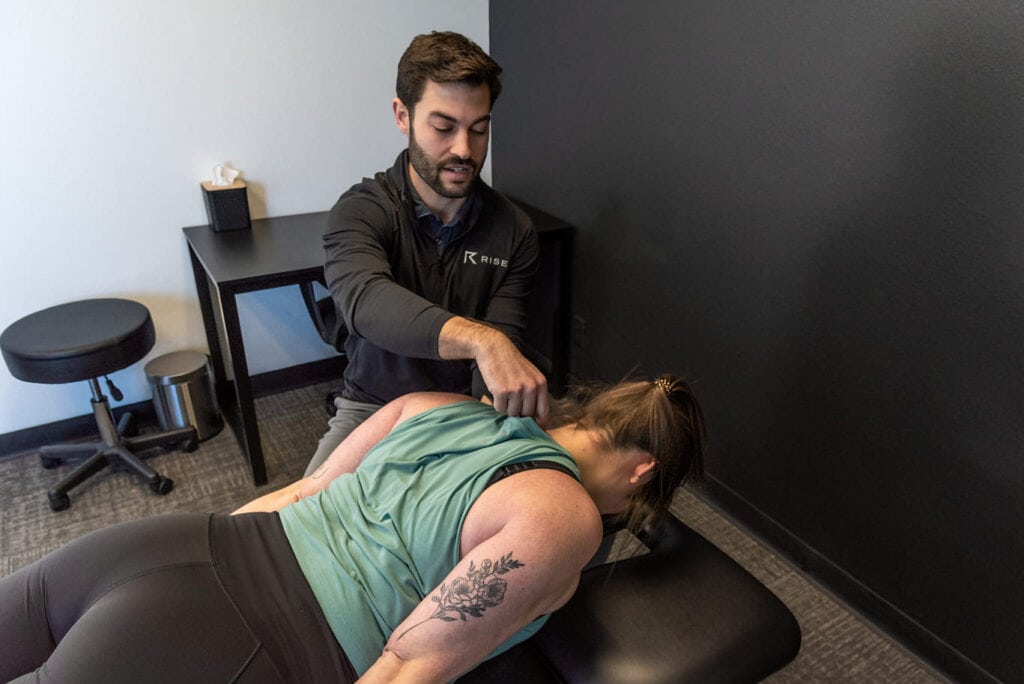
What You Need to Know About Shoulder Impingement
- Shoulder impingement is a pinch or ache when you raise your arm, often overhead.
- It usually comes from how your shoulder blade and rotator cuff control the joint, not weak tissue alone.
- Rest alone rarely fixes it, since the shoulder needs strength and control to move freely.
- Targeted rotator cuff and shoulder blade work is what creates lasting relief.
- Most cases resolve with physical therapy and never need surgery.
Do this today to calm shoulder impingement:
- Ease off heavy overhead pressing and the movements that pinch.
- Keep moving the shoulder in comfortable, pain-free ranges.
- Use ice after activity and adjust how you sleep to take pressure off the shoulder.
- Start gentle rotator cuff and shoulder blade exercises within comfort.
- Get assessed if the pain is sharp, weak, or not improving.
We help active adults and athletes across Denver and the Front Range fix shoulder pain and get back to training without surgery or long layoffs. Call us at (720) 248-4386 or book a call, and we will build a plan around your goals.
What Is Shoulder Impingement?
Shoulder impingement happens when the rotator cuff tendons and the soft tissue around them get compressed in the space beneath the top of the shoulder. As you lift your arm, that space narrows, and if the joint is not moving well, the tendons get pinched and irritated. It is also called subacromial pain syndrome.
For years, the explanation focused only on the shape of the bone overhead. We now know that how your shoulder blade and rotator cuff control the joint plays a big role. That is good news, because control and strength are things we can change.
What Does Shoulder Impingement Feel Like?
The classic sign is a pinch or ache as you raise your arm to about shoulder height and above. Many people feel a painful arc in the middle of the movement that eases at the very top. Pain at night, especially lying on that side, is common too.
What Are the Symptoms of Shoulder Impingement?
The main symptom is shoulder pain with overhead or reaching movements, often with a pinch partway through the motion. If lifting your arm brings on a familiar catch or ache, impingement is high on the list. Watch for these common signs:
- A pinch or ache on the front or side of the shoulder when reaching up.
- A painful arc as you raise your arm to shoulder height.
- Pain reaching behind your back or across your body.
- Aching at night, especially lying on the affected side.
- Weakness or fatigue with overhead tasks.
Pain with movement and a painful arc usually points to impingement. Significant weakness, where the arm struggles to hold a position, can suggest a rotator cuff tear and is worth checking.
What Causes Shoulder Impingement?
Shoulder impingement usually comes from repeated overhead load combined with how well your shoulder blade and rotator cuff control the joint. The shoulder trades stability for a huge range of motion, so it relies on good control. When that control slips or the load climbs too fast, the tendons get pinched.
Common Contributors
- High volumes of overhead pressing, swimming, throwing, or climbing.
- A quick jump in training load without enough recovery.
- Limited shoulder blade control narrows the space for the tendons.
- Stiffness in the mid back and shoulder that changes how the arm moves.
- Rotator cuff muscles fatigue before the work is done.
This is why simply resting often is not enough. If the control and strength issues remain, the pinch returns when you load the shoulder again.
How Do You Fix Shoulder Impingement at Home?
Early treatment means calming the irritation while keeping the shoulder moving and starting gentle strengthening rather than resting completely. Total rest tends to leave the shoulder stiff and weak, which slows recovery. Here is a sensible plan for the first week or two.
- Reduce the aggravating load. Step back from heavy overhead pressing and the movements that pinch.
- Keep moving in comfortable ranges to prevent stiffness.
- Use ice after activity, and adjust your sleep position to ease night pain.
- Begin light rotator cuff and shoulder blade exercises with pain-free effort.
- Keep training the rest of your body so you maintain your fitness.
If pain and weakness are not improving after a couple of weeks, get assessed. Guessing with a shoulder often turns a short recovery into a long one.

Is It Impingement or a Rotator Cuff Tear?
The two can feel similar, but the pattern of pain and strength gives clues. Impingement usually causes pain with movement and a painful arc, while a significant tear more often causes clear weakness and loss of control. The table below is a helpful starting point.
| Feature | Impingement | Significant tear |
|---|---|---|
| Main complaint | Pinch and pain with overhead motion | Weakness and loss of control |
| Strength | Mostly preserved, painful | Noticeably reduced |
| Painful arc | Common | May be present with weakness |
| First step | Guided rehab | Prompt assessment, then rehab |
A skilled assessment tells us how your shoulder is actually working, which matters more than a single label. We test your strength and control, then build the plan from what we find.
How Is Shoulder Impingement Diagnosed?
Shoulder impingement is usually identified from your symptoms and a hands-on movement assessment rather than imaging. We watch how your arm and shoulder blade move, test your strength, and check which positions reproduce your pain. Scans are not always needed and often show changes that do not match your symptoms.
This is why a skilled assessment matters more than a single image. It tells us exactly what is driving your pain so the plan targets the real cause. From there, we can show you which movements are safe to keep and which to adjust while the shoulder settles.
What Exercises Fix Shoulder Impingement?
The exercises that fix shoulder impingement build strength and control in the rotator cuff and shoulder blade so the joint moves freely. Start light, keep everything pain-free, and progress as you get stronger. Control beats heavyweight in the early stages.
- Rotator cuff external rotation. With your elbow at your side, rotate the forearm out against light resistance.
- Scapular rows. Pull the shoulder blades back and down to support the cuff.
- Wall slides. Slide the arms up a wall with control to train smooth overhead motion.
- Prone Y and T raises. Build the upper back and shoulder blade muscles.
- Mid back mobility. Gentle rotation and extension to free up how the arm moves.
The right starting point depends on your pain, your strength, and your goals. Progressed too slowly, nothing changes, pushed too fast, the shoulder flares. Matching the dose to you is what makes these exercises work.
Which Movements Should You Avoid?
Avoid the movements that clearly pinch or sharply hurt, especially heavy overhead pressing during a flare. Pushing through sharp pain tends to keep the tendons irritated. The goal is to stay active in pain-free ranges while you rebuild control.
- Heavy overhead presses and behind-the-neck movements while it is painful.
- Repetitive reaching overhead without rest.
- Sleeping directly on the painful shoulder.
- Any movement that brings a sharp pinch or lasting ache.
You do not have to stop training, just train around the shoulder while it recovers. We help you keep working without feeding the problem.
Can Posture Cause Shoulder Impingement?
Posture can play a role, since how you carry your shoulder blade affects the space the rotator cuff has to move. A stiff mid back and a shoulder blade that sits poorly can narrow that space and add to the pinch. The fix is not just standing up straight, but building the strength and mobility that let the shoulder move well.
We look at your mid back, your shoulder blade control, and how you move under load. Small changes there often free up the shoulder more than chasing posture alone.
How Long Does Shoulder Impingement Take to Heal?
Most cases of shoulder impingement improve within six to twelve weeks of focused rehab, though mild cases settle faster. The timeline depends on how long it has been going on, how soon you start the right plan, and how consistent you are. Returning to heavy overhead work too early is the most common reason recovery stalls.
A steady, progressive plan usually gets you back to full strength faster than stopping and starting. We use clear checkpoints before you return to pressing and overhead sport.
Can You Keep Lifting With Shoulder Impingement?
You can usually keep training if you avoid the movements that pinch and reduce heavy overhead load for a while. Many lifters keep working on other areas and use modified pressing as the shoulder recovers. We help you adjust your training so you maintain strength without aggravating the shoulder. If the pain is sharp or the arm feels weak, get assessed first.
When Should You See a Physical Therapist for Shoulder Impingement?
See a physical therapist if your shoulder pain has lasted more than a couple of weeks, keeps returning, or is interrupting your sleep and training. You do not need a referral to get started, and earlier care usually means a faster recovery. The sooner we understand how your shoulder moves, the sooner you get a plan that works.
At Rise Rehab and Sport Performance, every visit is one-on-one with a Doctor of Physical Therapy. We assess your strength, your shoulder blade control, and the demands of your sport, then build a plan around your goals. You stay active while you heal, and you always know your next step.
Get Your Shoulder Moving Freely Again
Shoulder impingement does not have to mean surgery or months on the sidelines. We help active adults and athletes across Denver and the Front Range calm the pain, rebuild control, and return to the movements they love. No pushing through pain, no generic handouts, just a clear plan built for you.
What We Offer
We provide one-on-one, hour-long sessions with a Doctor of Physical Therapy, built around your sport and your goals. Every plan targets the root cause of your shoulder impingement, not just the sore spot.
Book a Call
If shoulder pain is holding you back, let us help you turn it around. Call us at (720) 248-4386 or book a call to claim your free 15-minute discovery call and start a plan built around your goals. Move better, train harder, and get back to what you love.

Frequently Asked Questions
What is the fastest way to fix shoulder impingement?
The fastest path is to calm the irritation while you keep the shoulder moving and start gentle strengthening. Step back from heavy overhead work, use ice after activity, and begin light rotator cuff and shoulder blade exercises within comfort. This settles symptoms while it rebuilds the control that protects the joint.
Should I rest or exercise a shoulder impingement?
You should keep the shoulder moving within comfortable ranges rather than resting it completely. Tendons and muscles need progressive load to rebuild, and full rest tends to leave the shoulder stiff and weak. The goal is the right amount of movement that calms symptoms while it builds strength.
How do I know if it is impingement or a rotator cuff tear?
Impingement usually causes a pinch and a painful arc with movement, while a significant tear more often causes clear weakness and loss of control. A sudden injury can also raise the chance of a tear. A physical therapist can test your strength and movement to tell the difference.
How long does shoulder impingement take to heal?
Most cases improve within six to twelve weeks of focused rehab, with mild cases settling faster. Starting the right plan early and staying consistent are what shorten the timeline. Returning to heavy overhead work too soon is the main reason recovery stalls.
Can I still lift weights with shoulder impingement?
You can usually keep training if you avoid the movements that pinch and reduce heavy overhead load for a while. Many lifters work other areas and use modified pressing as the shoulder recovers. If the pain is sharp or the arm feels weak, get assessed before continuing.
Does shoulder impingement need surgery?
Most shoulder impingements resolve with physical therapy and never need surgery. A focused plan that builds rotator cuff and shoulder blade control resolves it for most people. Surgery is rare and reserved for cases that do not respond to a thorough rehab plan.